
Text: Verena Hahn
“Wer hätte das gedacht” (“Who would have thought it”) – this sentence, that in 2018 decorated the front of a 19th-century apartment building in the city centre of Mülheim an der Ruhr, sounds like it can’t quite decide between proudness and disbelief. It is indeed unbelievable: just before, a group of artists, musicians and organisers with DIY ethics signed the purchase contract for the building they had called “Makroscope” for some years already. Their association managed to receive donations and loans of over 340,000 euro to turn the four-storey building into a sociocultural centre for the arts that is there to stay. “And suddenly, punks became proprietaries,” says Nils Herzogenrath.
When the subsequent renovation works begin, the 34-year-old multi-instrumentalist had already been living in Cologne for some years, where he is studying at the Academy of Media Arts and working on the second album of his shoegaze-psychadelic-pop solo project Vomit Heat. Four years later, “Second Skin” was released on Ana Ott. The label for experimental genre transgressing music grew within the subrented rooms of Makroscope from 2013 and in return helped to build a community that sustained the art centre for the years to come.
The choice of label is an indication of the environment that shaped Nils the most. Essen is the city where he resided and went to school. The answer to where he lived, however, crosses the city’s borders, just like the subway lines U11 or U18 that connect the city’s workers, family members and other commuters with the adjacent neighbourhoods of Mülheim an der Ruhr and Gelsenkirchen. All of these cities, just like Duisburg, Dortmund and Bochum, belong to the fifth-largest urban agglomeration in Europe: the Ruhr region in the west of Germany. Here, one city merges into another, and there are streets that end up with a different postcode than the one they started with.

The polycentric structure of the region can be traced back to the 19th century when the coal mining industry transformed villages into cities within the shortest time. To this day, mining remains the most important identity-forming narrative in the region, not only because of the economic upturn powered by industrialisation. This identification is closely linked with a confident working class from the previous century from which assertive trade unions and resistance to fascist forces emerged – at least back then. In the same year, in 2018, when with the purchase of the Makroscope building a new structure was built in Mülheim, 15 km up north, in Bottrop, Zeche Haniel closed down – the last remaining black coal mine in Germany. Today, many of the collieries are reused for cultural purposes, while the rest of the region seems to be in an identity crisis between research location, shopping malls and empty stores.
Most of the year, it is the art and music scenes of Cologne and Düsseldorf, only a delayed train ride away, that attract the attention of audiences and young artists in search of a base. It is probably not the steep career opportunities, the well-equipped concert spaces or the showcase festivals that make others stay and build something up. In cities like Essen or Duisburg, there is a chronic deficiency of institutionalised venues and networks, with the exception of the conservatory, where young musicians can grow within professional conditions. A large proportion of contemporary avant-garde music and art in the Ruhr region takes place in interim uses that are overlooked by the cultural offices of the municipalities.
Since there is no one doing the dirty work for those young artists, and doing everything on your own is not a sustainable undertaking, these conditions require a joint effort, resulting in scenes with a sense of community that most of the art schools can only dream of. “Actually, I never felt the desire to organise shows, as this is rather stressful. But I wanted it to happen, I wanted to have the result. And since nobody was doing it, I’ve been struggling through a lot of shit for many years, just because I wanted all of this to take place. Pretty blatant self-exploitation, too, by the way,” says Dennis Dycks, a social worker, organiser and musician, who, together with Felix Möser, runs the Ana Ott label.
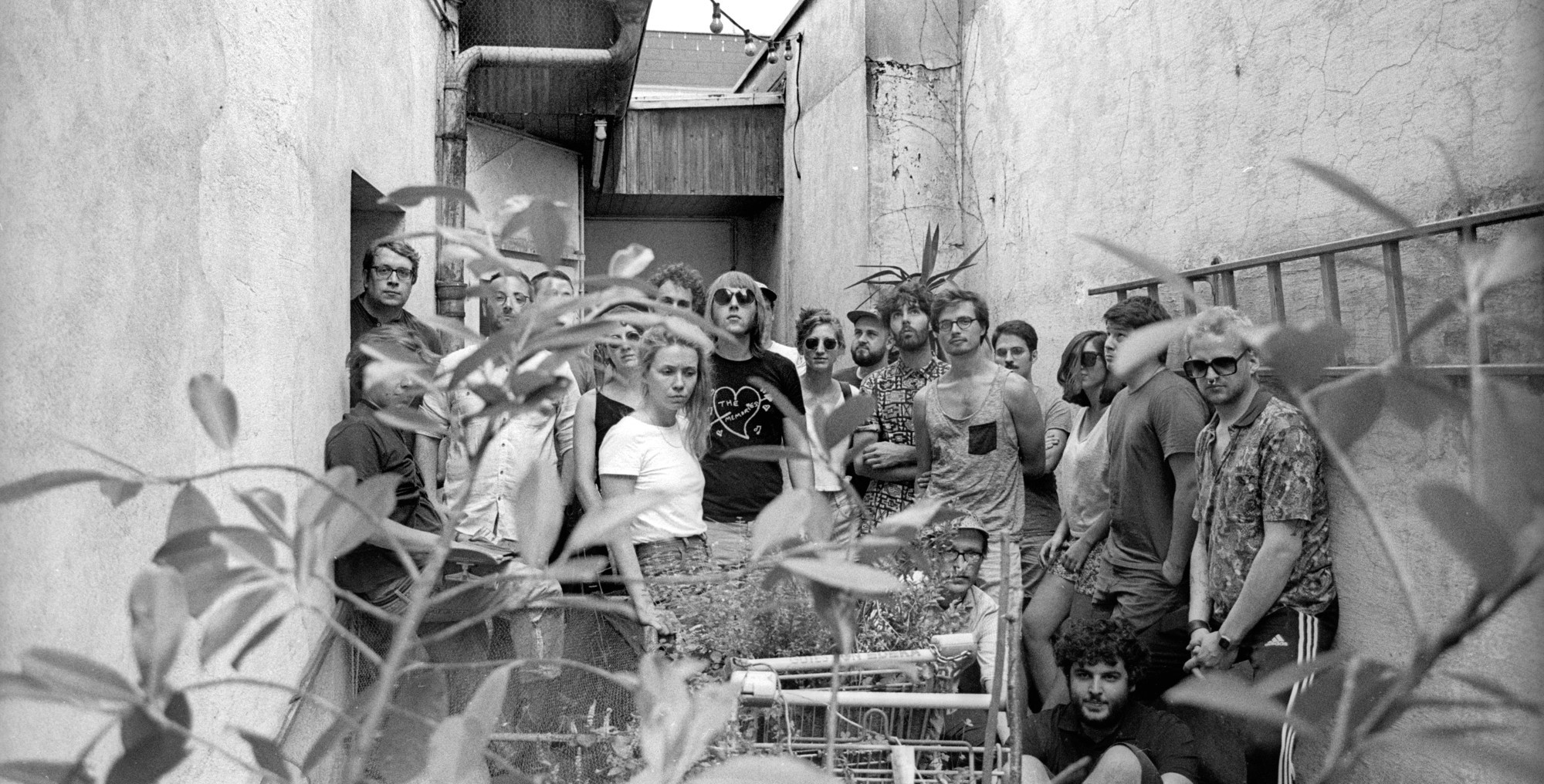
So who is Ana Ott? Dennis and Felix chose to give the label a name as if it was an individual that is defined by what they do, not by any genre alignment. Nevertheless, you can still recognise certain stylistic coherences running through the catalogue, which can be explained already by the fact that many of the Ana Ott artists appear with different projects, just like Nils Herzogenrath. Next to the four Vomit Heat releases, he is represented in the catalogue with several releases by his two Krautrock formations, Transport and Nasssau.
But what connects the Ana Ott artists is perhaps also a kind of shared quest. Nils’ band colleague at Transport and Nasssau, electronic musician and programmer Edis Ludwig, describes the sound of Makroscope, whose music programme was curated to a large extent by Ana Ott’s catalogue: “Makroscope had this orientation of offstream [abseitig], abstract music that wanted to radically question certain musical forms. Abstract is not really the right word for it; you could also say minimalist: if you concentrate on a single element that you want to work on.”
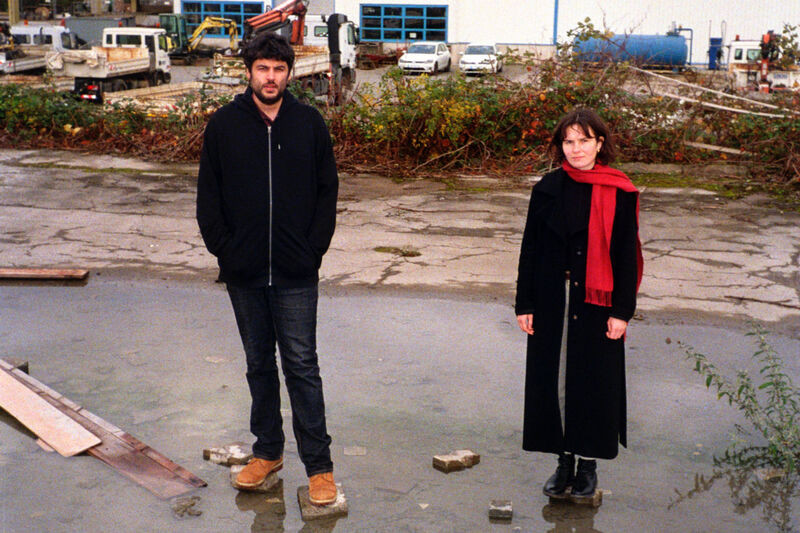
This minimalism is indeed reflected in many of the releases: in the form of long-lasting chords, drones or rhythms, as in the case of Krautrock bands Transport or France. The French trio has been playing the same rhythm for most of the past ten years, as Nils knows.
It is also reflected in a number of solo projects that push the limits of its respective instrument, such as the latest release “Tales from the Subterranean” by saxophonist Julius Gabriel. On the vinyl release “Geduldig”, whose sides are shared by two soloists, drummer Steffen Roth and guitarist Konni Behrendt, drums sound like a string instrument while the guitar occasionally becomes percussive. “Οδός της Βόννης” by Elisa Kühnl shows the Mülheim-born vocalist’s fascination for the limitless capacities of the human voice that most of us don’t even approach out of shame. In her screaming performances, the voice never stops being a powerful emotional communication medium, while a richness of textures between trills and screeching, breathing and intense volume reveals itself.
The first artist to be released on Ana Ott was Edis Ludwig with his solo project Tesk, moving between ambient and noise. A good match regarding Edis’ biography, which was shaped less by music school than by harsh noise, Krautrock and free jazz made in the Ruhr region.
Edis Ludwig and Nils Herzogenrath have known each other since going to secondary school together in Essen. Nils, who had long since left his guitar teacher behind at the time (“He was a soloist. I always associated a rather straddle-legged attitude with that. There’s also a jazzy soloing, but I always found the rocky one very disgustingly masculine”), convinced Edis to form a harsh noise band with him. “For a 16-year-old, Nils was pretty rad, because he liked to equip shopping carts with contact mics and jump into them,” says Edis. Using music software he got from a friend, Edis recorded the sounds created by Nils created and played them back amplified – his first musical steps.
At the same time, a community of young people pre- and post-high school diploma with roots in autonomous, skate, punk, DJ and band culture was forming in the Ruhr region around formats such as the event series for experimental music and performance Denkodrom in Essen and the community drawing and music event Skribble Gebibble in Oberhausen. The audience shared an interest in experimental forms, away from the mainstream anyway, but also away from subcultural traditions of what an average party or punk show is supposed to look like. Skribble was also the place where, from a series of jointly organised concerts, Felix Möser and Dennis Dycks forged their plan to found Ana Ott.
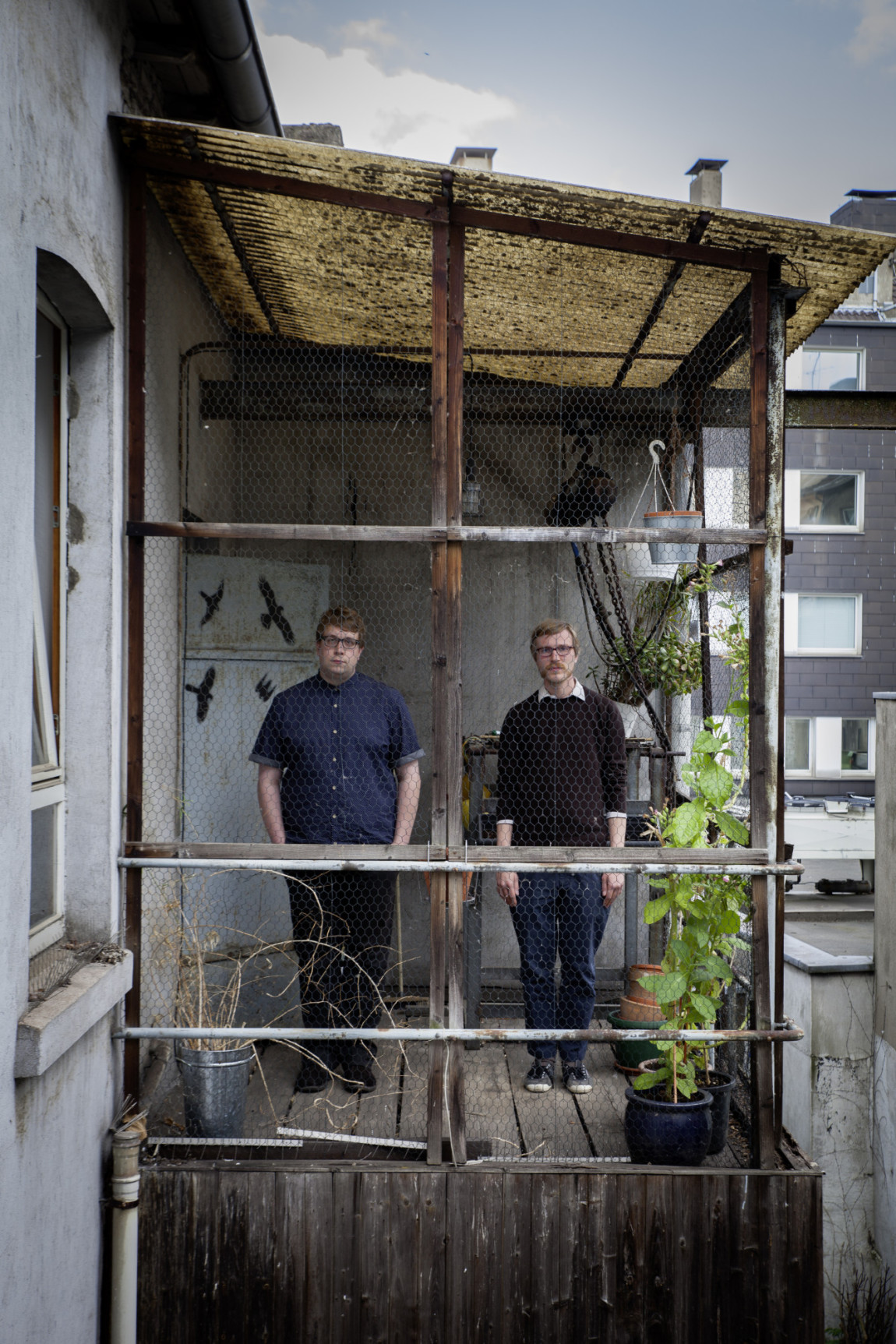
After trying out free jazz, Edis joined a band with Nils and their friend, drummer Niklas Wandt, that not only gave him space to develop as a musician but also led him to the stage of the Cologne Philharmonic Hall a few years later with Krautrock band Transport. “Krautrock is traditionally played in major keys. I learned to make chords and melodies very slowly. It’s actually a rewarding way to learn, because you’re jamming on one chord the whole time anyway, so you have a lot of time to find out what the right and wrong notes are, compared to jazz, where you have to play a new chord for every bar.”
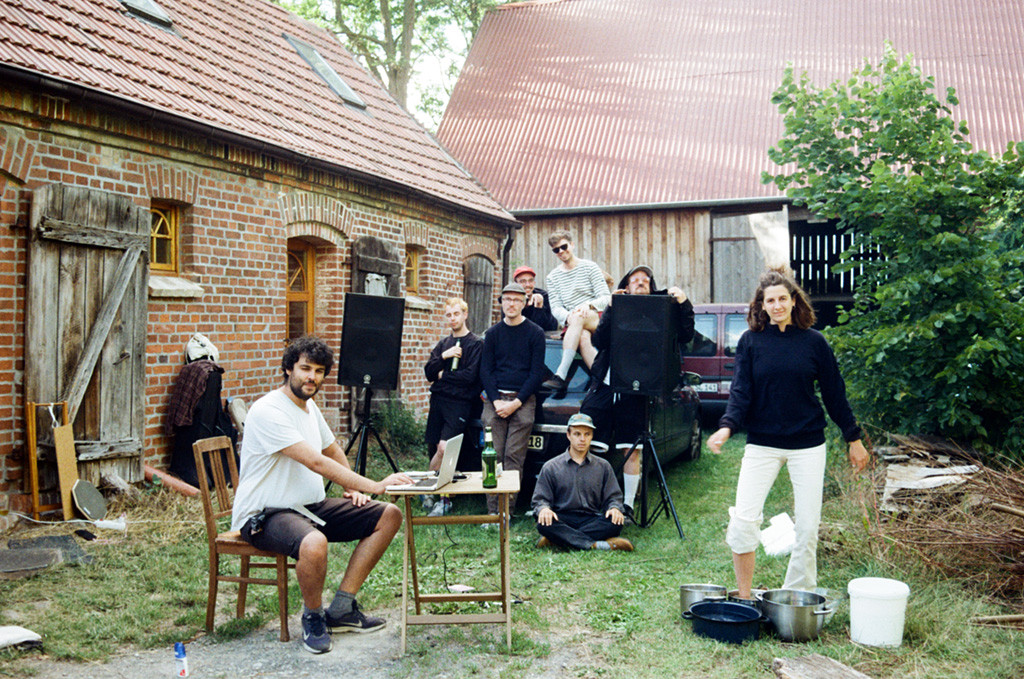
There are probably not many musicians who have performed with two Krautrock bands in a philharmonic hall, but Edis and Nils are two of them. In 2023, together with their band colleague Elisa Kühnl, who leads the experimental choir Glossa, the band Nasssau transforms the auditorium of the Cologne Philharmonic Hall into a shell.
Nasssau consists most of the time of Tim Diedrich, Dennis Dycks, Elisa Kühnl, Dominik Lau, Nils Herzogenrath, Edis Ludwig, Sebastian von der Heide and Este Kirchhoff. Like an engine, the band operates a vehicle made out of constants like key and rhythm, on which either guest improvisers can settle down or minimal changes can unfold over a long period of time.
Between all those exercises in improvisation, there is space for compositional practices or concept albums on the Ana Ott label, too. One of those releases is “Other People’s Crimes” by Br’lâaB, which sounds like a day structured by alternating phases of boredom and thrill spent in an American police office.
Br’lâaB, an alias of Belgian guitarist Ameel Brecht, is only one of many connections to the bordering country that, with its rich landscape of experimental music festivals and labels such as Kraak and Meakusma, has been attracting artists worldwide with an interest in adventurous art. “Edis had a roommate who listened to a lot of drone, Taj-Mahal Travellers and that kind of stuff. And he told me about Kraak Festival in Belgium. “So we went there in 2011. I remember it exactly because – life changing! – France played. I’ve never experienced anything like that. This was the first time I experienced something similar to trance through music. Of course, this was something we took home with us,” Nils recalls. “Those people are not celebrities you can’t approach. And then this thing with Makroscope started. Suddenly, there was this space and you could just book them all there.”
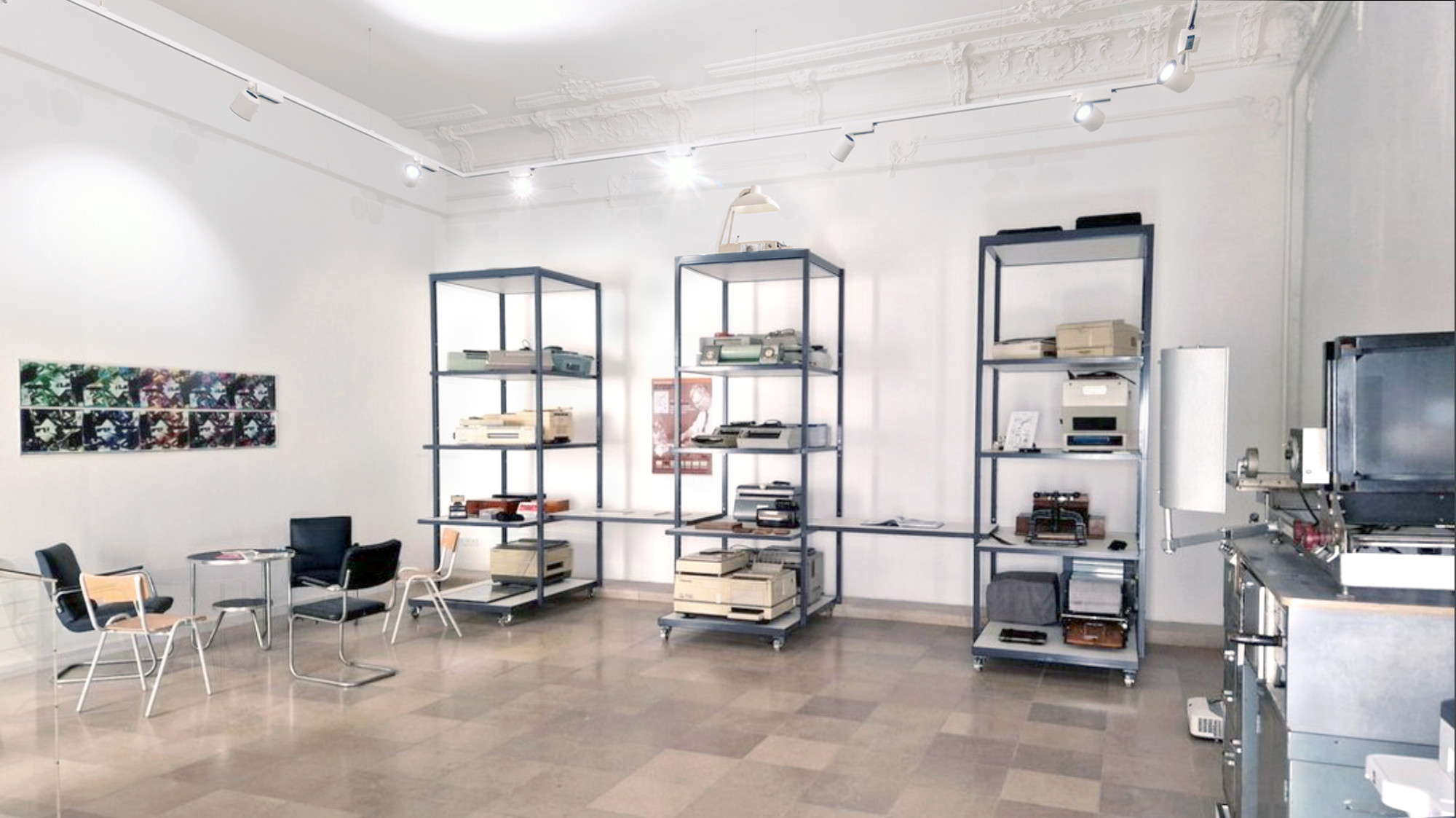
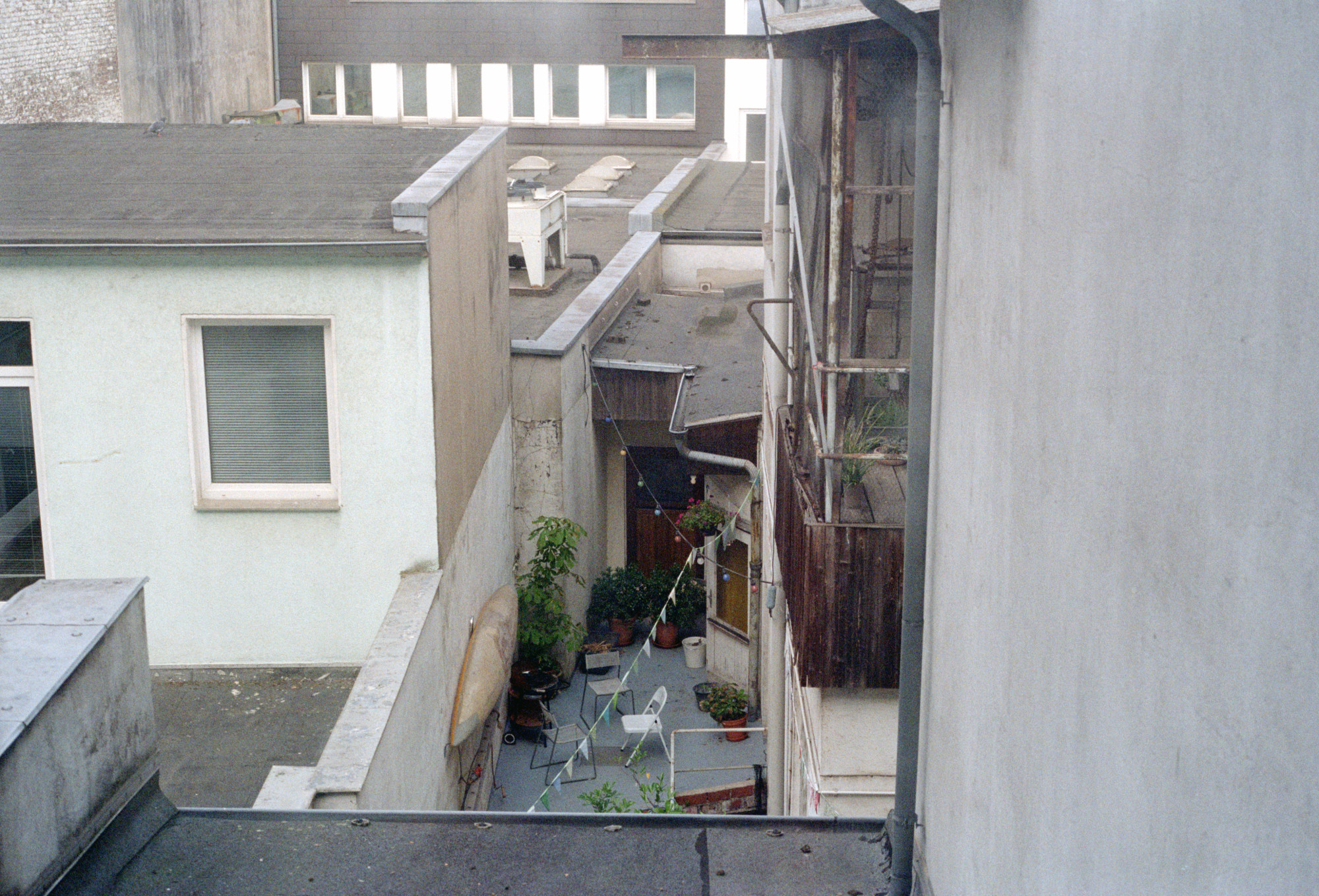
The cornerstone that turned the building in Friedrich-Ebert-Straße 48 into Makroscope – after it had been used by a local climate initiative, after it had been a stationery shop, after it had been a headquarters of the German national socialist party in the 1930s – was one single room in the attic. That apartment had been rented by printmaker Klaus Urbons as a storage for his historical collection of photo copy machines. The collection was soon to be transformed into a globally unique photocopy museum on the ground floor of the Makroscope. When the two artists Jan Ehlen and Jerry Jerome Krüger helped Urbons with transportation and saw the building, they decided to rent another room in the building as an office for Shiny Toys – a festival for experimental audiovisual art in Mülheim that is like a crossroads connecting the rich history of experimental cinema and music of the region from the past with time-based art from the present. Jan Ehlen invited the freshly founded Ana Ott to co-use their office space. Room by room, the group turned the building into a museum and art centre with studio spaces and a strong interest in DIY approaches towards technology. When the building suddenly went up for sale at the end of 2017, this could have been the end of Makroscope. But without this caesura, the Makroscope might not have found the stability it has today.
One day, without any announcement, estate agents suddenly appeared in the building. They were joined by prospective buyers. The artists had not even been informed that the building was up for sale. After a first moment of shock, someone from the community suggested investing his life insurance in the property. And suddenly there was a plan: Makroscope would buy the building!
The artists developed a financing model that is based on three pillars. Alongside donations, a share of the purchase price was financed by a loan from a community-oriented bank. That loan is financed through the model of a loan and gift community (“Leih- und Schenkgemeinschaft”): a number of individuals commit to a monthly donation over a period of five years, which is pre-financed by the bank. Additionally, two people decided to move into two flats in the building permanently and assumed the share of the costs. And, against all expectations, the group actually managed to sign the purchase agreement.
The building then had to be completely renovated to meet the requirements of the building authority and the new tenants – all DIY, of course. Today, the building has outgrown its original profile, cooperates with regional cultural institutions and organises a film club, feminist reading clubs, exhibitions and community programmes, some of which are supported by public funding. But whatever may happen to public cultural funding given the conservative government and tight budgets in Germany – the Makroscope as a building and as a free space will not disappear any time soon.
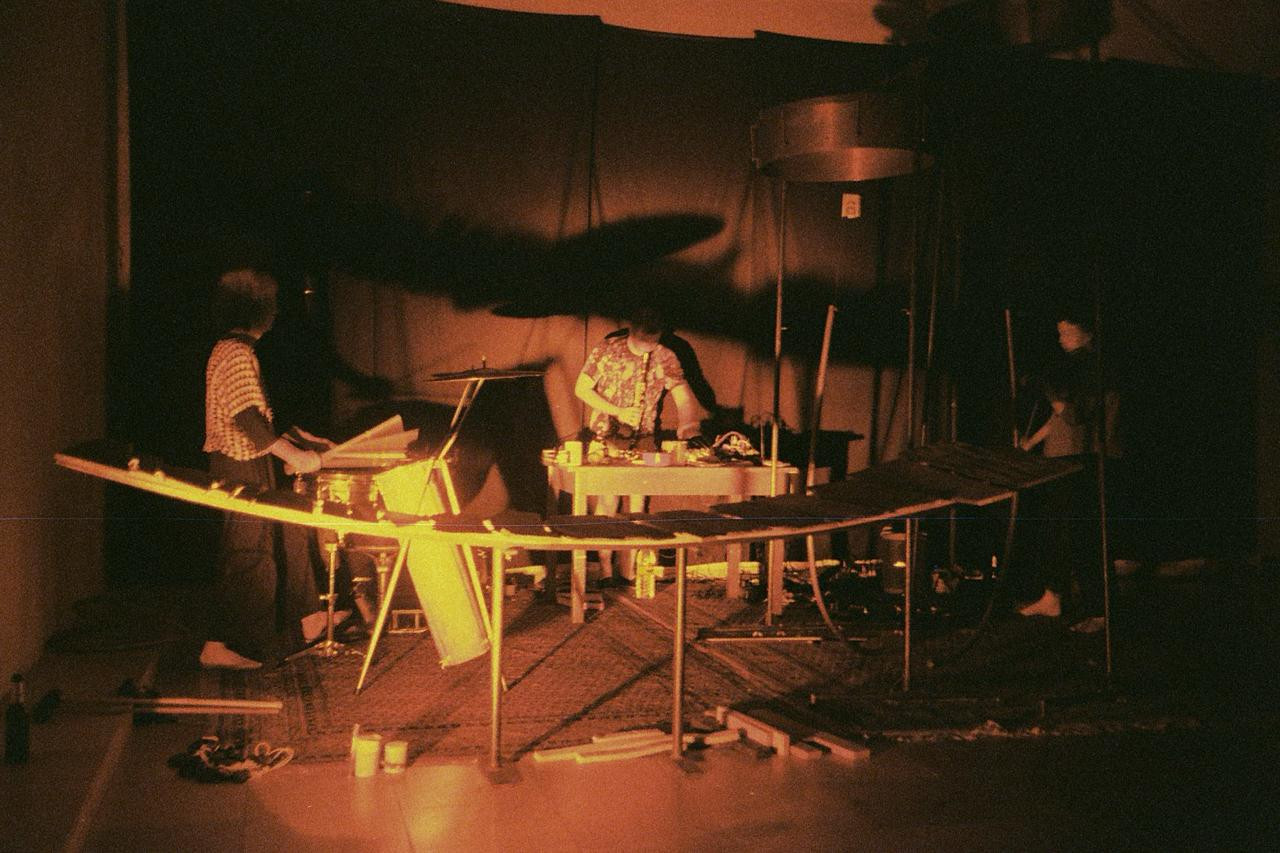
Edis Ludwig goes on describing the sound of Makro: “It’s the sound of people that maybe used to play in rock bands before, then got themselves a tape recorder and played it through an amp with effects. This is a sound that definitely wasn’t comprehended in an academic electronic music context at that time. The academic electronic musicians from the old days were glad they didn’t have to work with tape anymore. For them, it wasn’t such a thing to focus on the physical working material, but on the musical material.” When browsing through the ecosystem of Makroscope, it becomes obvious that there seems to be a fascination for technology from the previous century: Ana Ott releases on cassette and vinyl, whereas artists work analogously, as Edis describes it, and artworks and posters are produced with copy machines from Klaus Urbons’ museum, while some of the websites of festivals happening in Makroscope have a 90s DIY programming pre-template vibe to them.
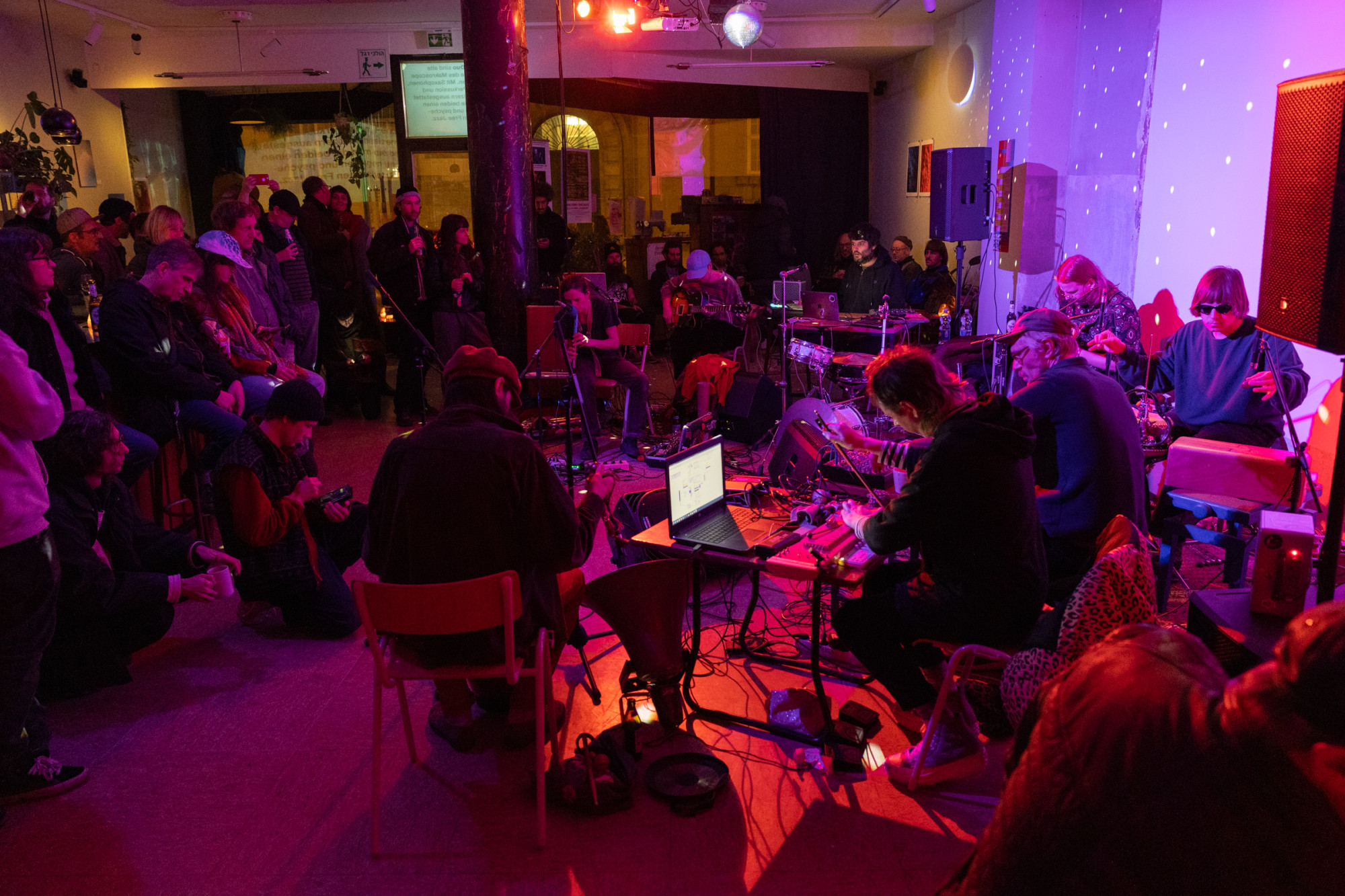
Does the Makro community tend towards a certain nostalgia? “I would say it’s a cultural artefact in certain scenes,” says Dennis Dycks. “In my case, this has to do with availability – I had no money, so you work with what is there. And this brings me back to Makroscope, which creates a space where these things can happen. Someone goes to a school closure and brings home overhead projectors for light art, and there were some tape machines, too. Can someone use them? You know, like that. Someone throws something away, and you try to recycle it. I wouldn’t say someone ever planned to do this; it just happened.”
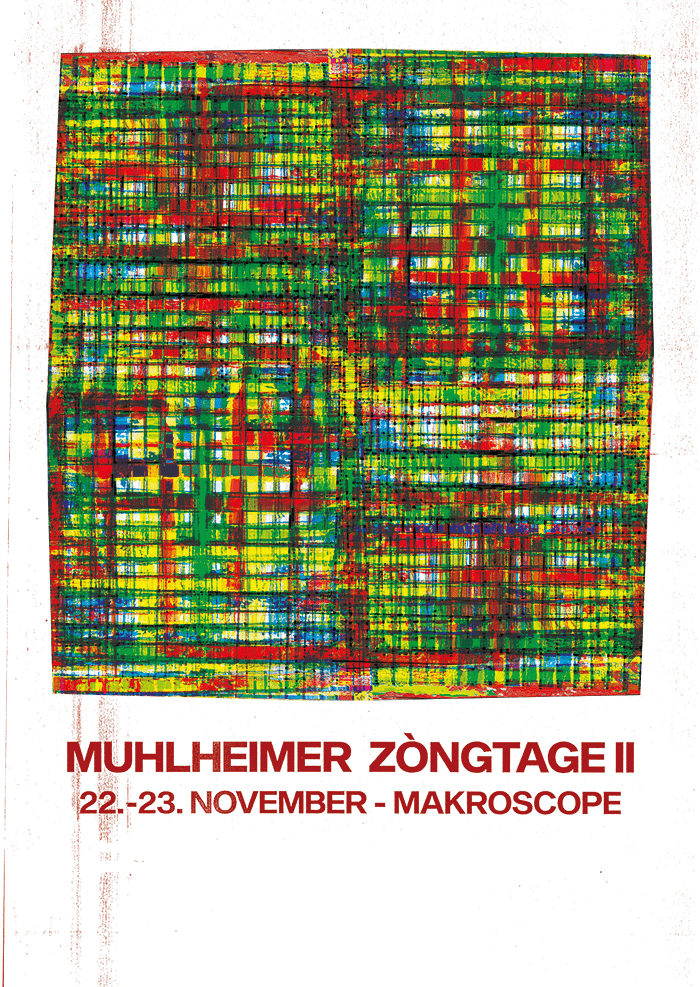
This approach and the music that results from it seem to have little to do with the value chain of social media and the way these platforms inform music production today, in terms of track length, suspense curves, compatibility with algorithms and smartphone loudspeaker compression, a certain interrelationship with video and movement or the potential to go viral. Yet the catalogue does not sound out of date. Instead, it is an example of how contemporaneity is not solely created by taking up the most dominant cultural motifs, but also by questioning their alleged Alternativlosigkeit (“alternativelessness”). “For me, it’s important to question these forms of authorship,” says percussionist and Nasssau’s drummer Sebastian von der Heide, who himself runs a label called Iriai Verlag. With an endless list of mysterious band and DJ names that reveal no identity, he runs counter to the trend of turning oneself into a brand that was probably picked up most readily by a young generation of DJs. “Of course, it’s also a way of hiding and being insecure. I didn’t come up with it as a concept; it just comes with DIY culture. And what I really like about Nasssau is that it is never completely clear who is in the band or that no one claims authorship for the songs.”
Luckily, the unease with certain forms of exploitation does not limit the curiosity for the freedom of musical expression. “Last year, I went to see Janet Jackson and still love Merzbow,” says Nils, who has never been into concepts of “true”. “I’ve always found it charming to break with certain scene codes. Some people miss the fact that there were supposedly very scene-oriented concert contexts up until the 00s. So something being exclusively goth or exclusively punk. But there’s an understanding of exclusivity in there that doesn’t just refer to music, but also to the exclusion of who goes to the concerts. But I think it would be great if people from contexts that we have nothing to do with came to the Makro for concerts.”
The last few months have been a little quieter on Ana Ott’s Bandcamp page. However, plans for new releases are being forged in the background, including a follow-up release by saxophonist Julius Gabriel. “Maybe there will be something that is actually punk, but also a little bit not,” says Dennis. “And I really like that little bit of not.” So far, he has struggled with releasing punk, because it is a genre that has already been mostly served. There are quite a few genres that are not yet fully served. So Ana Ott is likely to have a job for a long time to come.

This article is brought to you by 3/4.sk as part of the EM GUIDE project – an initiative dedicated to empowering independent music magazines and strengthening the underground music scene in Europe. Read more about the project at emgui.de.
Funded by the European Union. Views and opinions expressed are, however, those of the author(s) only and do not necessarily reflect those of the European Union (EU) or the European Education and Culture Executive Agency (EACEA). Neither the EU nor EACEA can be held responsible for them.